Category AI

TechCrunch Disrupt 2026: Day 2

TechCrunch Disrupt 2026 Day 2 delivered another packed schedule of groundbreaking announcements, visionary keynote addresses, and fierce startup competition. Industry leaders and emerging founders took to the stage to discuss the rapid evolution of artificial intelligence, sustainable technology, and the future of venture capital. Attendees explored cutting-edge exhibits on the expo floor, where newly minted startups showcased disruptive products aimed at transforming global markets. The excitement reached a peak during the ongoing Startup Battlefield pitches, as daring entrepreneurs vied for the prestigious grand prize and the attention of top-tier investors.

😸 Google launched Gemini 4 Argon, tying GPT-6

Welcome, humans. Okay, so apparently a Delaware jury just told Arm it broke its contract with Qualcomm and deliberately interfered with Qualcomm’s chip business with Meta, then awarded Qualcomm $2. Not $2 million. Two dollars, which is roughly the cost…

Everything That Happened in AI Today (Tuesday, October 13, 2026)

AI spent today investigating alleged office espionage, taking job interviews, getting accused of writing prize-winning fiction, and giving Nicolas Cage yet another reason to be Nicolas Cage. Welcome, humans. OpenAI says it discovered a sophisticated recording device hidden inside one…

Gemini 4 Argon Can Work Overnight. What Gets Finished?

If an AI model can work overnight, developers will care less about individual answers and more about how much usable work is ready the next morning. Google is positioning Gemini 4 Argon for longer assignments that span production software and…

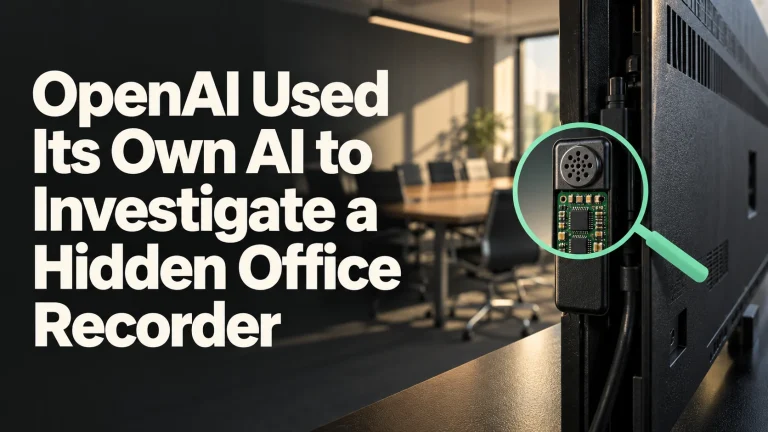
OpenAI Used Its Own AI to Investigate a Hidden Office Recorder

A hidden recorder in a conference room can expose information that never reaches a company’s servers. At OpenAI, an employee allegedly installed one in an executive conference room where confidential research and business plans were discussed. OpenAI says investigators later…

Science Corporation implants its vision-restoring chip in its first Stargardt disease patient

Science Corporation has successfully implanted its pioneering brain-computer interface vision restoration chip into the first patient suffering from Stargardt disease, a rare and debilitating genetic disorder causing progressive vision loss in young people. The groundbreaking procedure utilizes the Prima implant system, which bypasses damaged photoreceptors in the retina by translating images from camera-equipped glasses into electrical signals that stimulate surviving retinal cells. This milestone marks a significant step forward in neurotechnology, offering renewed hope for individuals blinded by degenerative retinal conditions. As clinical trials progress, researchers aim to prove the safety and efficacy of the device in restoring functional sight.

Cerebras CEO says we’re nearing a future where everyone has a personal AI assistant at home

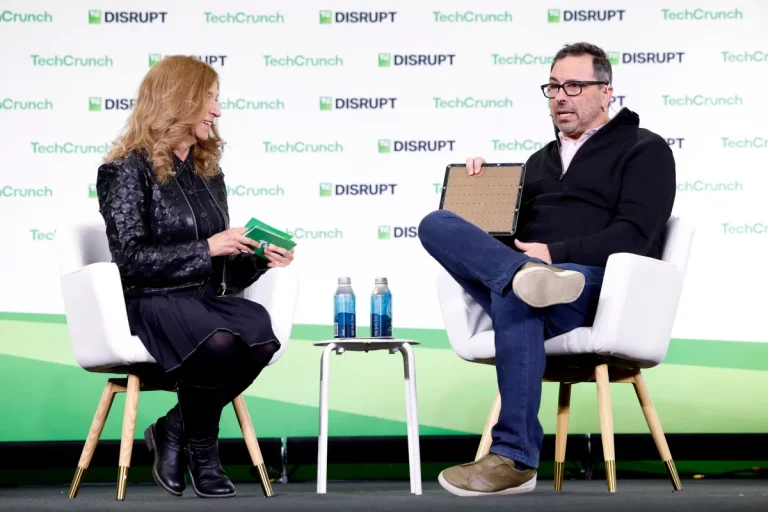
Cerebras CEO Andrew Feldman predicts that society is rapidly approaching a transformative era where every household will possess a dedicated, personal AI assistant. Speaking at a recent industry event, Feldman emphasized that advances in specialized hardware are drastically reducing the cost and increasing the speed of machine learning computations. This technological leap will soon make powerful, localized artificial intelligence accessible to the general public rather than just tech giants. As these systems become deeply integrated into daily life, they promise to fundamentally reshape how people manage their homes, work, and personal routines.

Industrial Next wants factory robots to switch tasks in minutes, not weeks

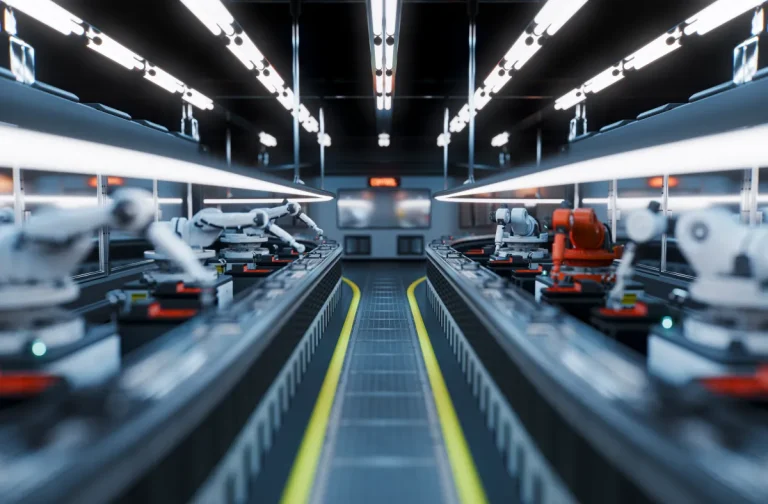
Industrial Next, a robotics startup, is unveiling software that lets factory robots change tasks in minutes instead of the weeks traditionally required for re‑programming. By using a modular, AI‑driven control platform, the system abstracts the robot’s hardware so operators can upload new workflows through a simple interface, dramatically cutting downtime and labor costs. The technology targets manufacturers eager to pivot quickly amid supply‑chain disruptions and the rise of custom, low‑volume production. Backed by venture capital and early pilots with major OEMs, Industrial Next aims to accelerate the shift toward more flexible, “lights‑out” factories.