Category tech

J-PAL North America launches Homelessness Evaluation Resource Hub to drive evidence-informed approaches to housing stability

J-PAL North America has launched the Homelessness Evaluation Resource Hub, a pioneering initiative designed to promote evidence-informed strategies for achieving long-term housing stability. This digital platform provides policymakers, service providers, and researchers with critical tools, data, and rigorous evaluations to assess what works best in homelessness intervention. By bridging the gap between academic research and practical fieldwork, the hub aims to empower local communities with actionable insights. Ultimately, this resource seeks to optimize funding, improve program effectiveness, and drive systemic change to address the ongoing housing crisis across North America.

Hashim Sarkis to step down as dean of the School of Architecture and Planning

Hashim Sarkis has announced he will step down from his position as dean of the prestigious School of Architecture and Planning. During his impactful tenure, Sarkis guided the institution through a period of significant growth, academic innovation, and enhanced community engagement. His leadership focused heavily on addressing critical global challenges such as sustainable urban development and climate resilience through thoughtful design. The university will soon launch a comprehensive global search to find a successor who can continue building upon his impressive legacy. Sarkis plans to return to teaching and research within the academic community following a well-deserved sabbatical.

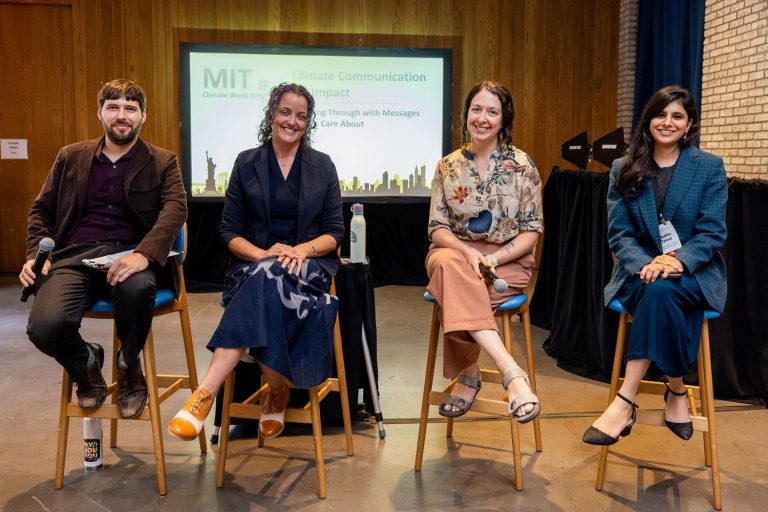
At New York Climate Week 2026, MIT connects with a global network

At New York Climate Week 2026, the Massachusetts Institute of Technology actively engaged with a global network of climate leaders, policymakers, and innovators to accelerate urgent environmental solutions. Representatives from the institute showcased cutting-edge research and fostered critical cross-sector partnerships aimed at tackling escalating global climate challenges. By participating in high-profile panel discussions and collaborative workshops, MIT emphasized the vital role of academic-industry cooperation in driving sustainable transitions. This prominent gathering provided a strategic platform for the institution to align its pioneering technological advancements with international climate action frameworks.

Implantable device uses ultrasound to improve drug delivery to the brain

Treating brain disorders has long been hindered by the formidable blood-brain barrier, which frequently blocks life-saving medications from reaching their targets. To overcome this obstacle, biomedical engineers have developed an innovative implantable device that uses focused ultrasound to temporarily and safely open this protective barrier. By applying targeted acoustic waves, the technology allows therapeutic drugs to pass directly into specific regions of the brain. This groundbreaking approach promises to revolutionize treatments for challenging neurological conditions such as brain tumors, Alzheimer's disease, and Parkinson's disease.

Watch the universe emerge from the dark ages, with Lumina

The universe is on the brink of a monumental visual revelation thanks to Lumina, a groundbreaking technological advancement designed to peer into the ancient cosmos. By harnessing cutting-edge observational capabilities, scientists are now poised to illuminate the enigmatic cosmic dark ages—the mysterious period before the very first stars and galaxies ignited. This revolutionary instrument promises to bridge crucial gaps in our understanding of stellar evolution and the infancy of space-time. As researchers prepare to analyze the unprecedented data, humanity stands ready to witness the breathtaking moment light first pierced the primordial shadows of our universe.

At MIT, Martha Minow speaks on sustaining democracy, both by using and overcoming AI

At a recent MIT event, Harvard legal scholar Martha Minow emphasized the urgent need to both utilize and regulate artificial intelligence to preserve democratic institutions. She argued that while AI technologies hold immense potential to improve governance and civic engagement, they simultaneously pose severe threats through misinformation, algorithmic bias, and the erosion of public trust. Minow urged technologists, policymakers, and citizens to collaborate proactively in establishing ethical guardrails and robust legal frameworks. Ultimately, she maintained that safeguarding democracy in the digital age requires conscious human intervention to ensure that emerging tools serve the public good rather than undermine it.