Category AI

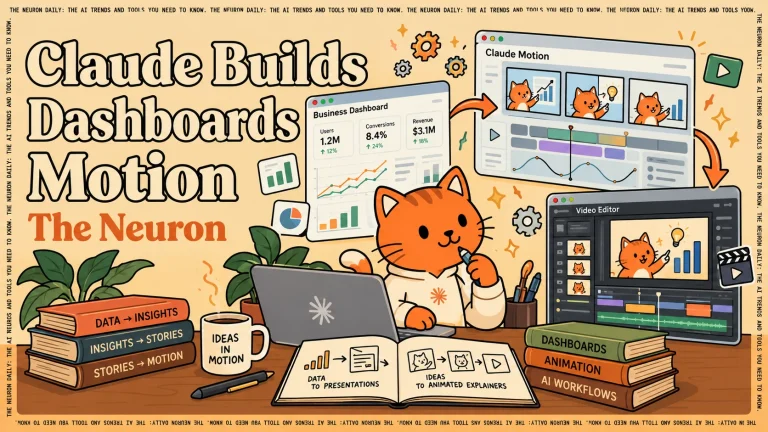
😺 Claude Dashboards + Motion launched

Anthropic has officially launched Claude Dashboards alongside a new Motion feature, expanding the capabilities of its popular AI assistant platform. This update introduces dynamic visual interfaces and enhanced movement tracking, allowing users to interact with data and workflows in a more streamlined, intuitive way. Designed to boost productivity, the tools empower individuals and teams to organize complex information and automate daily tasks more effectively. The release marks a significant step forward in Anthropic's mission to make artificial intelligence not just conversational, but deeply practical for everyday professional environments.

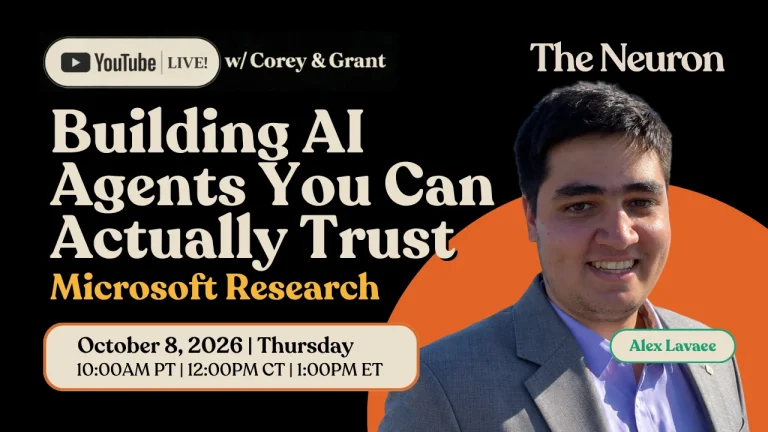
The Future of Coding Agents, According to Microsoft Research: How to Actually Trust AI-Written Code

Microsoft Research is tackling the critical challenge of how developers can safely trust AI-written code through the advancement of autonomous coding agents. As artificial intelligence rapidly evolves from a simple autocomplete tool into an active collaborator, ensuring the reliability and security of its output remains paramount. Researchers are exploring innovative frameworks for verification, testing, and continuous oversight to keep humans safely in the loop. Ultimately, this research aims to bridge the trust gap, enabling engineers to seamlessly integrate AI agents into complex software development workflows without sacrificing quality or control.

Anthropic Says You Can't Abuse Claude. But Can AI Be Harmed?

Artificial intelligence company Anthropic recently sparked philosophical and ethical debates by asserting that users cannot genuinely abuse its Claude chatbot. While the company maintains that artificial intelligence lacks sentience, feelings, or consciousness and therefore cannot suffer, the growing sophistication of conversational models complicates the user experience. Many people naturally develop empathetic bonds with empathetic-sounding machines, projecting emotions onto lines of code. This dynamic forces developers and ethicists to grapple with a bizarre new dilemma: even if the AI cannot be harmed, does indulging in abusive behavior toward a lifelike digital entity corrupt or degrade human behavior?

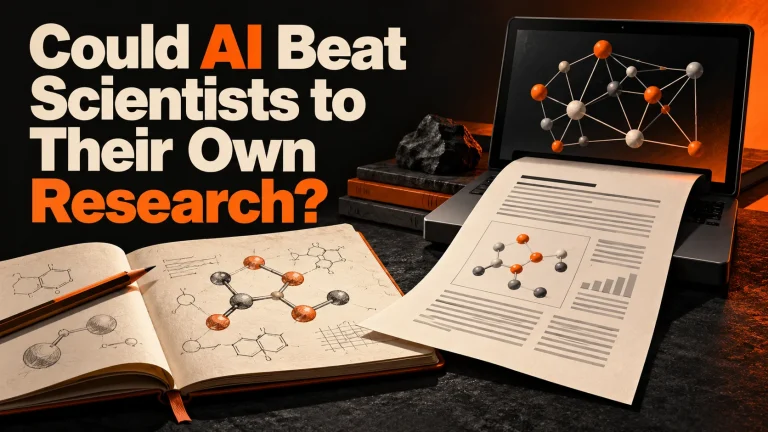
Could AI Beat Scientists to Their Own Research?

Artificial intelligence is rapidly transforming the scientific landscape, raising provocative questions about whether machines could eventually outperform human researchers. Advanced AI models are now capable of analyzing massive datasets, predicting complex protein structures, and generating novel hypotheses at unprecedented speeds. While these technological breakthroughs promise to accelerate discoveries in medicine, physics, and beyond, they also spark intense debates among experts. Critics and enthusiasts alike are weighing the ethical implications, reproducibility concerns, and the fundamental shift in how knowledge is created. Ultimately, this technological leap forces the scientific community to redefine the core role of human intuition in the pursuit of truth.