Category AI

Everything That Happened in AI Today (Monday, October 26, 2026)

The artificial intelligence landscape on Monday, October 26, 2026, was marked by significant advancements and regulatory shifts across the tech industry. Researchers unveiled breakthrough multimodal models capable of unprecedented real-time reasoning and contextual understanding, blurring the line between human and machine cognition. Meanwhile, global policymakers converged to debate stringent new governance frameworks aimed at balancing rapid innovation with robust safety protocols. Major tech enterprises also announced strategic partnerships focused on expanding sustainable energy grids to power next-generation data centers. These developments collectively underscore a pivotal moment as AI integration accelerates across both consumer markets and critical infrastructure.

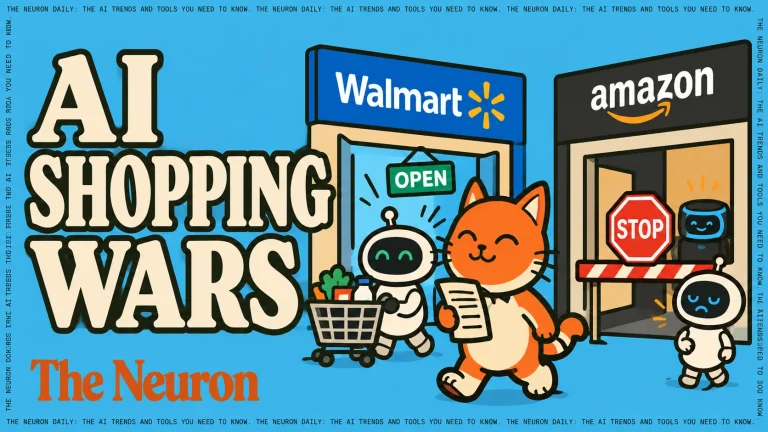
😺 Walmart announces AI shopping controls

Welcome, humans. Spotify may have found the perfect defense against the AI takeover: nobody wants their favorite song summarized in three bullet points. In this week’s earnings update, co-CEO Gustav Söderström argued that AI agents will take over chores people…

Will AI expose the rickety infrastructure of the internet?

As artificial intelligence continues its explosive growth, experts warn that the technology's massive data demands and automated traffic threaten to expose the severe vulnerabilities lurking within our aging internet infrastructure. The rapid proliferation of AI-generated content and relentless web-scraping bots are already pushing legacy servers and networks to their absolute limits, causing unprecedented strain on digital pathways originally built for a simpler era. Without immediate and substantial modernizations to hardware, protocols, and energy grids, this impending collision between cutting-edge AI and rickety foundational systems risks triggering widespread digital instability. Ultimately, the boom serves as a harsh wake-up call, forcing tech leaders to confront the urgent need to rebuild the internet's decaying backbone before it collapses under the weight of the future.


Block’s new voice model sounds eerily human

Block, the fintech conglomerate behind Square and Cash App, unveiled a new generative‑AI voice model that mimics human speech with striking realism, sparking excitement and unease across the tech world. The model, trained on a massive dataset of spoken language, can produce natural‑sounding dialogue, accents and intonations that rival the latest offerings from OpenAI and Google. Block says the technology will enhance its customer‑service bots and enable

Forced to pick, Grok’s AI model chooses Republicans. OpenAI’s picks Democrats. 

A recent experiment forced two leading language models to pick a political side, revealing stark contrasts in their choices. When prompted to align with a party, Anthropic’s Grok consistently selected the Republican Party, while OpenAI’s ChatGPT gravitated toward the Democratic Party. Researchers attribute the divergence to differences in training data, fine‑tuning objectives, and the underlying reinforcement‑learning frameworks each company employs. The findings have reignited debates over algorithmic bias, prompting calls for greater transparency and standardized testing to ensure AI systems do not unintentionally endorse partisan viewpoints.